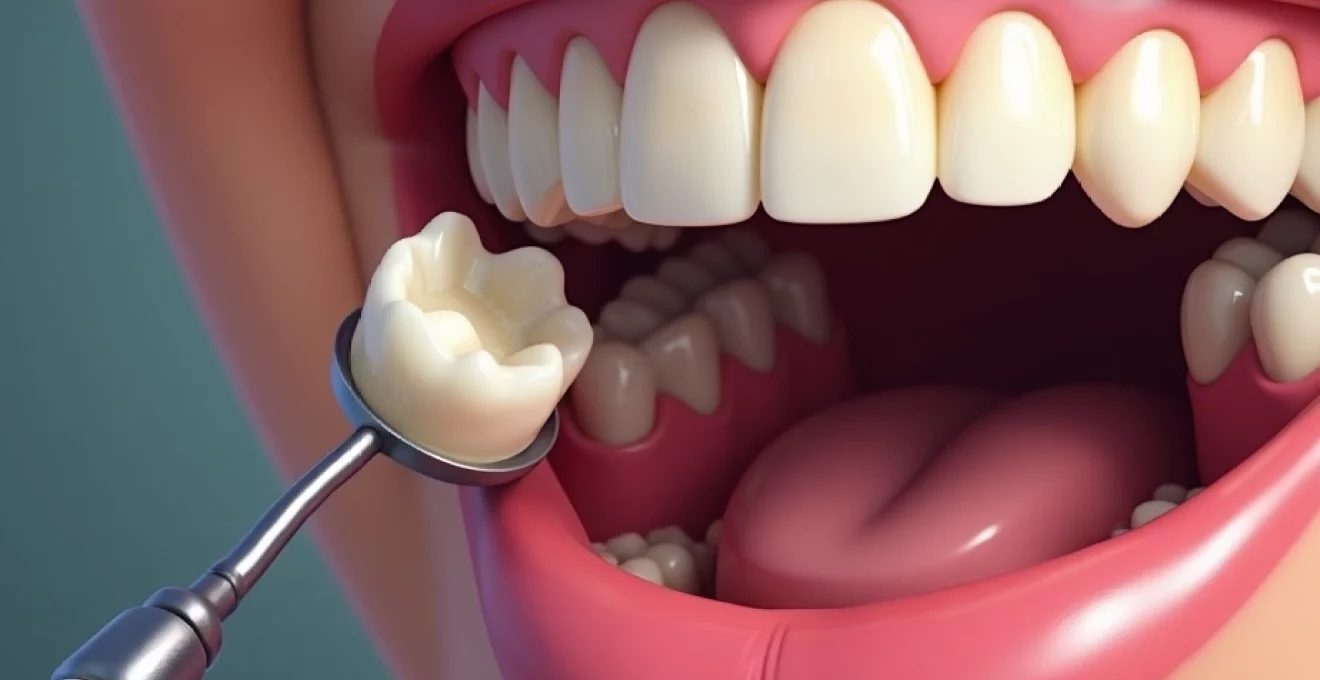
Swallowing a temporary crown represents one of the most anxiety-inducing dental incidents patients can experience. This unexpected event occurs more frequently than many realise, particularly given that temporary crowns are secured with weaker cement designed for easy removal during permanent crown placement. Understanding the immediate medical implications, proper response protocols, and potential complications becomes crucial for managing this dental emergency effectively.
The human digestive system handles foreign objects differently depending on their size, material composition, and location within the gastrointestinal tract. Temporary crowns, whilst designed for oral environments, present unique considerations when accidentally ingested. Their material composition, ranging from bis-acryl composite resins to polymethyl methacrylate compounds, interacts with gastric acids in predictable patterns that influence medical decision-making.
Medical professionals encounter this scenario regularly in emergency departments, where patients arrive concerned about potential complications. The distinction between ingestion and aspiration represents the most critical initial assessment, as these scenarios require entirely different treatment approaches. Modern imaging techniques and established protocols ensure systematic evaluation of each case, minimising risks whilst providing appropriate patient reassurance.
Immediate medical assessment protocol for swallowed temporary crown ingestion
Emergency medical assessment begins with a comprehensive patient history to establish the timeline of crown ingestion and associated symptoms. Healthcare providers must rapidly determine whether the temporary crown entered the digestive tract or respiratory system, as this distinction fundamentally alters treatment protocols. Patients experiencing coughing, choking, or respiratory distress require immediate airway evaluation, whilst those with normal breathing patterns typically indicate gastrointestinal ingestion.
Emergency room triage procedures for dental prosthetic ingestion
Triage nurses utilise standardised assessment criteria to classify temporary crown ingestion cases appropriately. The Manchester Triage System categorises these incidents based on respiratory symptoms, patient age, and associated complications. Adult patients without respiratory compromise typically receive lower priority classifications, whilst elderly patients or those with swallowing difficulties require more urgent evaluation.
Initial vital sign monitoring establishes baseline measurements for ongoing assessment. Blood pressure, heart rate, respiratory rate, and oxygen saturation provide essential data for detecting potential complications. Healthcare providers document the approximate size and material composition of the swallowed crown, information that influences subsequent imaging decisions and treatment planning.
Radiographic imaging requirements using panoramic and intraoral x-rays
Standard radiographic protocols for foreign body ingestion begin with anteroposterior and lateral chest X-rays to exclude respiratory tract involvement. These images reveal radiopaque temporary crowns containing metallic components, though purely resin-based crowns may not appear clearly on conventional radiographs. Digital radiography enhances visualisation of subtle foreign bodies through advanced image processing techniques.
Abdominal X-rays follow chest imaging to locate crowns within the gastrointestinal tract. The stomach, small intestine, and colon exhibit characteristic radiographic appearances that help localise foreign objects. Serial imaging at 24-hour intervals tracks crown progression through the digestive system, providing reassurance about normal transit patterns.
Gastrointestinal transit monitoring through digital radiography
Digital radiographic monitoring protocols establish standardised timeframes for crown progression through anatomical landmarks. Normal gastric emptying occurs within 4-6 hours for solid objects, whilst small bowel transit requires 6-8 hours under typical conditions. Delayed progression beyond these timeframes may indicate obstruction or impaction requiring medical intervention.
Advanced imaging techniques include computed tomography (CT) scanning for cases involving radiolucent crowns or complex anatomical considerations. CT provides superior soft tissue contrast and three-dimensional visualisation, enabling precise localisation of dental prosthetics within gastrointestinal structures. Modern CT protocols utilise low-radiation techniques appropriate for foreign body evaluation.
Contraindications for endoscopic retrieval in crown swallowing cases
Endoscopic retrieval presents specific risks when applied to temporary crown ingestion cases. Sharp edges or irregular surfaces on damaged crowns increase perforation risks during endoscopic manipulation. Additionally, the size and shape of temporary crowns often exceed safe parameters for routine endoscopic removal, particularly through the oesophageal sphincter.
Patient factors including advanced age, cardiac disease, and coagulopathy represent relative contraindications for invasive procedures. The risk-benefit analysis must weigh procedural complications against natural passage probability. Most temporary crowns pass spontaneously within 72-96 hours, making conservative management the preferred approach for uncomplicated cases.
Temporary crown material composition and digestive system interaction
Understanding temporary crown materials becomes essential for predicting their behaviour within the digestive system. Modern temporary crowns utilise various polymer-based compounds designed for biocompatibility and ease of fabrication. These materials undergo specific interactions with gastric acid, digestive enzymes, and intestinal flora that influence their transit characteristics and potential complications.
Bis-acryl composite resin biocompatibility in gastric environment
Bis-acryl composite resins represent the most common temporary crown material in contemporary dentistry. These polymers demonstrate excellent biocompatibility within oral environments, maintaining structural integrity under normal chewing forces and salivary exposure. The gastric environment presents different challenges, with hydrochloric acid concentrations reaching pH 1.5-3.5 during active digestion.
Research indicates that bis-acryl resins resist significant degradation in gastric acid over short exposure periods. The cross-linked polymer structure maintains dimensional stability, preventing fragmentation that could create sharp particles. This characteristic reduces perforation risks whilst ensuring predictable passage through intestinal segments. Surface modifications may occur through acid etching, but structural integrity remains largely intact.
Polymethyl methacrylate (PMMA) degradation patterns in stomach acid
PMMA-based temporary crowns exhibit different acid resistance characteristics compared to bis-acryl alternatives. The polymer backbone demonstrates stability in acidic conditions, though surface plasticisers and additives may leach into gastric contents. This process rarely affects crown structural integrity but can alter surface texture and appearance.
Laboratory studies demonstrate minimal PMMA degradation after 48-hour exposure to simulated gastric fluid. The material maintains its original dimensions and mechanical properties, supporting clinical observations of uncomplicated passage through the digestive tract. Additives such as colour pigments and radiopaque fillers remain bound within the polymer matrix, preventing systemic absorption.
Zinc oxide eugenol cement dissolution rates during gastric transit
Temporary crowns often retain traces of zinc oxide eugenol (ZOE) cement from their original placement. This cement demonstrates rapid dissolution in acidic environments, completely dissolving within gastric fluid over 2-4 hours. The dissolution products include zinc ions and eugenol compounds, both considered safe in the concentrations typically encountered.
ZOE dissolution may actually benefit crown passage by smoothing surface irregularities and reducing friction against intestinal walls. The process eliminates sharp cement fragments that could potentially cause mucosal irritation. Patients may notice a distinctive taste as dissolved cement components undergo absorption or elimination.
Stainless steel crown component corrosion resistance analysis
Some temporary crowns incorporate stainless steel components for enhanced retention or structural support. Medical-grade stainless steel demonstrates excellent corrosion resistance in biological environments, including exposure to gastric acid. The passive oxide layer on steel surfaces prevents significant metal ion release under normal digestive conditions.
Electrochemical studies confirm minimal steel corrosion during typical gastrointestinal transit times. Any metal ion release occurs at levels well below established safety thresholds for human exposure. The smooth steel surfaces facilitate passage through intestinal segments whilst maintaining structural integrity throughout the elimination process.
Clinical differentiation between aspiration and ingestion scenarios
Distinguishing between aspiration and ingestion represents the most critical initial assessment following temporary crown loss. This differentiation determines treatment urgency, imaging requirements, and intervention strategies. Aspiration into the respiratory tract constitutes a medical emergency requiring immediate intervention, whilst ingestion typically allows for conservative management with monitoring protocols.
Clinical experience demonstrates that patients can reliably differentiate between coughing episodes suggesting aspiration and normal swallowing sensations indicating gastrointestinal ingestion.
Laryngoscopy examination protocols for airway obstruction assessment
Direct laryngoscopy provides immediate visualisation of the upper airway to detect aspirated dental prosthetics. Emergency physicians utilise flexible fibreoptic laryngoscopes to examine the vocal cords, epiglottis, and upper trachea systematically. This examination identifies foreign bodies lodged within accessible airway structures whilst assessing for associated tissue trauma or inflammation.
Indirect laryngoscopy using rigid scopes offers superior illumination and suction capabilities for foreign body removal. The procedure requires topical anaesthesia and patient cooperation, making it suitable for stable patients without acute respiratory distress. Modern video laryngoscopy systems provide enhanced visualisation and documentation capabilities for complex cases.
Pulmonary function testing following suspected crown aspiration
Spirometry testing evaluates respiratory function following suspected aspiration incidents. Peak expiratory flow rates, forced vital capacity, and forced expiratory volume measurements detect airway obstruction or inflammation. These objective measurements complement clinical examination findings and guide treatment decisions.
Arterial blood gas analysis reveals acid-base status and oxygenation adequacy in patients with respiratory symptoms. Hypoxemia or hypercarbia may indicate significant airway compromise requiring immediate intervention. Serial measurements track respiratory function improvement following foreign body removal or conservative management.
Bronchoscopy intervention techniques for retrieving dental prosthetics
Flexible bronchoscopy enables visualisation and retrieval of aspirated crowns within the tracheobronchial tree. Specialised retrieval forceps, baskets, and magnetic devices facilitate foreign body removal through the bronchoscope working channel. The procedure requires conscious sedation and continuous monitoring of vital signs and oxygen saturation.
Rigid bronchoscopy offers superior instrument manipulation and ventilation control for complex retrievals. This approach proves particularly valuable for large or irregularly shaped crowns that resist flexible instrument manipulation. Operating room settings provide optimal conditions for managing potential complications during bronchoscopic interventions.
Chest CT imaging interpretation for foreign body localisation
High-resolution CT imaging provides detailed three-dimensional visualisation of the thoracic cavity for foreign body localisation. Multi-planar reconstruction techniques enable precise anatomical correlation between crown position and surrounding structures. This information guides bronchoscopic planning and predicts retrieval difficulty.
CT angiography protocols exclude vascular injury in cases involving sharp or irregularly shaped foreign bodies. Contrast enhancement highlights potential complications such as pneumothorax, haemothorax, or mediastinal injury. These findings influence treatment urgency and surgical planning decisions.
Emergency dental restoration procedures following crown loss
Immediate dental intervention focuses on protecting the exposed tooth structure whilst addressing patient discomfort. The prepared tooth underneath a temporary crown exhibits increased sensitivity and vulnerability to bacterial invasion. Emergency protocols establish temporary protection until definitive restoration becomes possible through routine dental care.
Dental wax application provides immediate coverage for exposed tooth surfaces, reducing sensitivity and preventing food impaction. Over-the-counter temporary dental cement offers more durable protection, though proper application requires careful instruction to avoid tissue irritation. Patients should receive clear guidance about eating restrictions and oral hygiene modifications during the interim period.
Pain management utilises non-steroidal anti-inflammatory drugs (NSAIDs) for their dual anti-inflammatory and analgesic effects. Topical anaesthetic gels provide temporary relief for acute sensitivity episodes. Antibiotic therapy may be indicated for patients with compromised immune systems or signs of periapical infection, though routine prophylaxis is not typically necessary.
Emergency dental appointments should be scheduled within 24-48 hours to prevent complications such as tooth movement, opposing tooth super-eruption, or bacterial invasion of the pulp chamber. Many dental practices maintain emergency appointment slots specifically for crown-related incidents. Patients should contact their regular dentist first, as familiarity with the case history facilitates appropriate treatment planning.
Post-ingestion monitoring and gastrointestinal complications management
Conservative monitoring protocols guide most temporary crown ingestion cases through successful resolution. Patients receive detailed instructions about symptom recognition and appropriate follow-up care. The monitoring period typically extends 5-7 days, encompassing normal gastrointestinal transit time plus a safety margin for individual variation.
Dietary modifications during the monitoring period include avoiding high-residue foods that could contribute to intestinal obstruction. Adequate hydration promotes normal digestive function and facilitates foreign body passage. Stool examination for crown passage provides definitive confirmation of successful elimination, though not all patients can reliably identify small dental prosthetics in faecal matter.
Complication recognition focuses on symptoms suggesting intestinal obstruction, perforation, or impaction. Severe abdominal pain, persistent vomiting, or absence of bowel movements requires immediate medical evaluation. Early intervention for genuine complications significantly improves patient outcomes and reduces morbidity risks.
Statistical data indicates that over 95% of accidentally swallowed temporary crowns pass through the digestive system without complications within 72 hours.
Surgical intervention becomes necessary in rare cases involving intestinal obstruction or perforation. Laparoscopic techniques offer minimally invasive approaches for foreign body removal when conservative management fails. These procedures require multidisciplinary coordination between emergency physicians, gastroenterologists, and surgical specialists.
Preventive measures and temporary crown retention enhancement techniques
Prevention strategies focus on improving temporary crown retention and patient awareness of potential complications. Modern dental techniques utilise improved cement formulations and crown designs that balance removability with adequate retention. Patient education about eating restrictions and oral hygiene practices significantly reduces crown loss incidents.
Enhanced cement selection considers individual patient factors such as saliva composition, chewing habits, and treatment duration. Temporary cements with improved adhesive properties provide better retention whilst maintaining removability for permanent crown placement. Some practitioners utilise provisional restoration materials that offer superior retention characteristics for extended treatment periods.
Crown design modifications include improved internal surface preparation and enhanced marginal adaptation. Digital scanning and computer-aided design (CAD) technologies enable precise temporary crown fabrication that reduces marginal gaps and improves retention. These advances particularly benefit patients requiring extended provisional restoration periods.
Patient compliance monitoring through regular follow-up appointments identifies potential retention problems before crown loss occurs. Symptoms such as increased mobility, sensitivity changes, or marginal opening warrant immediate evaluation and possible crown replacement. Proactive intervention prevents emergency situations and reduces patient anxiety about crown stability.