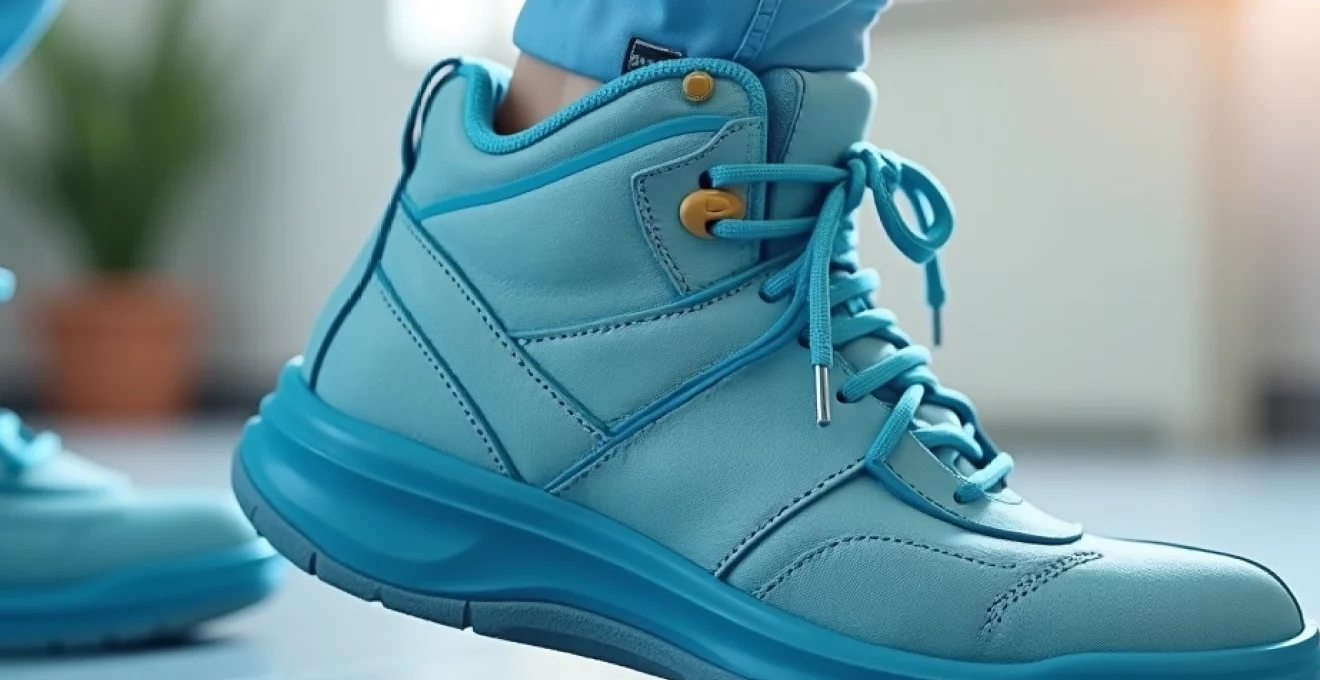
Medical walking boots represent critical orthopedic equipment requiring stringent cleaning protocols to maintain both patient safety and device functionality. These specialised devices, commonly known as CAM walker boots or controlled ankle motion boots, demand meticulous attention to hygiene standards that extend far beyond conventional footwear maintenance. Healthcare facilities must implement comprehensive decontamination procedures that address the unique challenges posed by these complex medical devices, which combine removable components, intricate fastening systems, and materials that can harbour dangerous pathogens.
The significance of proper walking boot hygiene cannot be overstated in clinical environments where cross-contamination poses substantial risks to vulnerable patients. Unlike standard footwear, medical walking boots frequently encounter bodily fluids, wound drainage, and hospital-acquired pathogens that require targeted elimination strategies. Professional cleaning protocols must address both visible contamination and microscopic threats, ensuring complete sterilisation whilst preserving the structural integrity of expensive orthopedic equipment that patients depend upon for mobility and recovery.
Pre-cleaning assessment and safety protocols for medical walking boots
Effective cleaning begins with comprehensive assessment protocols that evaluate both the device condition and contamination level present on each walking boot. Healthcare professionals must establish systematic inspection procedures that identify all areas requiring attention, from obvious soil accumulation to hidden debris lodged within mechanical components. This initial evaluation determines the appropriate cleaning intensity and disinfection requirements necessary for safe patient use.
Identifying CAM walker boot materials and construction components
Modern walking boots incorporate diverse materials requiring tailored cleaning approaches to prevent damage whilst achieving thorough decontamination. The outer shell typically consists of rigid plastic polymers resistant to most cleaning agents, whilst inner linings may feature moisture-wicking fabrics or antimicrobial treatments that demand gentle handling. Understanding material composition prevents costly equipment damage from incompatible cleaning solutions that could compromise structural integrity or therapeutic effectiveness.
Pneumatic components present particular challenges, as air bladders and pump mechanisms contain internal chambers where contaminants can accumulate beyond reach of standard surface cleaning. These sealed systems require specialised attention to prevent internal contamination that could affect pressure regulation or create breeding grounds for dangerous microorganisms. Healthcare facilities must maintain detailed inventory records documenting material specifications for each walking boot model to ensure appropriate cleaning protocol selection.
Evaluating contamination levels and infection control requirements
Contamination assessment protocols must distinguish between routine soiling and potentially infectious materials requiring enhanced precautions. Visual inspection alone proves insufficient, as dangerous pathogens remain invisible to the naked eye whilst posing serious transmission risks. Healthcare professionals must assume maximum contamination levels when dealing with walking boots from high-risk environments such as surgical units, wound care centres, or isolation facilities treating infectious diseases.
Risk stratification systems help determine appropriate cleaning intensity based on patient history and exposure circumstances. High-risk scenarios include boots worn by patients with open wounds, confirmed infections, or immunocompromised conditions requiring enhanced protective measures. Standard risk situations involve routine orthopedic support applications where basic decontamination suffices for safe reuse or storage.
Personal protective equipment standards for healthcare settings
Healthcare personnel conducting walking boot decontamination must utilise appropriate personal protective equipment to prevent exposure to potentially infectious materials. Standard precautions include fluid-resistant gowns, nitrile gloves rated for chemical exposure, and eye protection when using spray disinfectants. Respiratory protection becomes essential when employing vapour-based sterilisation systems or working in poorly ventilated areas where aerosol exposure risks exist.
PPE selection must consider both the cleaning agents employed and the anticipated contamination level present on each device. Extended cleaning procedures require comfort considerations that maintain protection whilst allowing sufficient dexterity for thorough component manipulation. Healthcare facilities should provide multiple PPE options accommodating different body sizes and task requirements to ensure consistent compliance with safety protocols.
Documentation requirements for medical device maintenance
Comprehensive record-keeping ensures accountability whilst supporting quality assurance programmes monitoring cleaning effectiveness. Documentation systems must track individual device histories, cleaning procedures performed, and personnel responsible for maintenance activities. Traceability requirements become particularly critical when investigating potential infection outbreaks or equipment failures that could implicate inadequate decontamination procedures.
Electronic tracking systems offer advantages over paper-based records, providing automated reminders for scheduled maintenance whilst generating reports supporting regulatory compliance. Many healthcare facilities implement barcode or RFID tagging systems that link each walking boot to its complete service history, facilitating rapid identification of maintenance requirements and usage patterns affecting replacement scheduling.
Disinfection protocols using Hospital-Grade antimicrobial solutions
Hospital-grade disinfection requires systematic application of EPA-registered antimicrobial solutions proven effective against healthcare-associated pathogens commonly encountered in clinical settings. These specialised formulations undergo rigorous testing to demonstrate efficacy against specific microorganisms whilst maintaining compatibility with medical device materials. Healthcare facilities must select disinfectants appropriate for both the target pathogens and the walking boot materials being treated.
Epa-registered disinfectants for orthopedic equipment sterilisation
The Environmental Protection Agency maintains strict registration requirements for disinfectants used on medical devices, ensuring products meet safety and efficacy standards appropriate for healthcare applications. EPA-registered solutions provide documented kill rates against specified pathogens within defined contact times, offering healthcare facilities evidence-based confidence in their decontamination procedures. Registration numbers appearing on product labels enable verification of approved uses and application parameters.
Quaternary ammonium compounds represent the most commonly employed disinfectant category for walking boot decontamination, offering broad-spectrum antimicrobial activity with relatively low toxicity profiles. These solutions demonstrate effectiveness against vegetative bacteria, enveloped viruses, and many fungi whilst remaining compatible with most medical device materials. However, certain resistant organisms require alternative disinfectant chemistries for reliable elimination.
Phenolic disinfectants provide enhanced activity against mycobacteria and certain resistant organisms but require careful material compatibility assessment due to potential plastic degradation. Alcohol-based solutions offer rapid action and excellent penetration properties but may damage certain rubber components or adhesive bonds present in walking boot construction.
Contact time requirements for clostridium difficile and MRSA elimination
Specific pathogens of concern in healthcare settings require precise contact time adherence to ensure reliable elimination from walking boot surfaces. Methicillin-resistant Staphylococcus aureus typically requires minimum contact times of one minute with appropriate quaternary ammonium solutions, whilst Clostridium difficile spores demand extended exposure periods or specialised sporicidal agents for effective elimination.
Healthcare facilities must maintain strict adherence to manufacturer-specified contact times, as premature removal of disinfectant solutions can result in incomplete pathogen elimination and subsequent transmission risks.
Contact time requirements vary significantly based on disinfectant concentration, surface porosity, and environmental conditions such as temperature and relative humidity. Healthcare personnel must receive comprehensive training on proper timing procedures, including recognition of factors that may extend required contact periods. Automated timing systems help ensure consistent compliance whilst reducing human error risks associated with manual time monitoring.
Quaternary ammonium compounds application techniques
Proper application techniques maximise quaternary ammonium compound effectiveness whilst minimising waste and ensuring complete surface coverage. Pre-cleaning procedures must remove organic matter that can interfere with antimicrobial activity, as proteins and other substances can bind active ingredients and reduce disinfectant potency. Surface preparation represents a critical step often overlooked in cleaning protocols but essential for reliable pathogen elimination.
Application methods must ensure adequate solution contact with all surfaces, including hidden areas within mechanical components and beneath removable padding elements. Spray applications offer convenience but may create aerosols requiring respiratory protection, whilst immersion techniques provide thorough coverage for removable components that can withstand liquid exposure. Healthcare facilities should establish standardised application procedures addressing each walking boot component individually.
Hydrogen peroxide vapour systems for deep penetration cleaning
Hydrogen peroxide vapour systems represent advanced decontamination technology capable of penetrating areas inaccessible to liquid disinfectants. These systems generate vaporised hydrogen peroxide that can reach internal pneumatic chambers and sealed compartments where conventional cleaning methods prove inadequate. Vapour-phase sterilisation offers particular advantages for high-risk situations requiring maximum assurance of pathogen elimination.
Vapour systems require specialised equipment and training but provide superior penetration capabilities compared to conventional liquid applications. The technology proves especially valuable for walking boots contaminated with spore-forming organisms or those requiring sterilisation rather than basic disinfection. However, material compatibility concerns require careful evaluation, as hydrogen peroxide can affect certain plastics and metal components over repeated exposures.
Mechanical cleaning procedures for removable components
Mechanical cleaning addresses physical debris removal and provides essential preparation for effective chemical disinfection. Walking boots contain numerous removable components requiring individual attention to ensure thorough decontamination of all surfaces and mechanisms. Systematic disassembly enables access to areas typically hidden during routine use but capable of harbouring dangerous contaminants.
Pneumatic pump and air bladder decontamination methods
Pneumatic systems present unique cleaning challenges due to internal chambers that may contain contaminated air or condensed moisture providing ideal breeding conditions for microorganisms. Decontamination procedures must address both external surfaces and internal pathways where conventional cleaning agents cannot reach through normal application methods. Specialised protocols become necessary to ensure complete system sterilisation without damaging sensitive pressure-regulation mechanisms.
Air bladder cleaning requires careful attention to valve mechanisms and connection points where debris can accumulate and interfere with proper sealing. These components must be thoroughly inspected for damage that could compromise sterility or functional performance. Internal flushing procedures using sterile solutions help remove accumulated contaminants whilst maintaining system integrity for continued therapeutic use.
Pneumatic components require specialised handling to prevent internal contamination that could affect pressure regulation and patient comfort during subsequent use.
Velcro fastening system debris extraction techniques
Velcro fastening systems accumulate substantial debris including lint, hair, skin cells, and other organic matter providing nutrients for bacterial growth. Standard cleaning approaches prove inadequate for removing deeply embedded contaminants from hook-and-loop surfaces, requiring specialised extraction techniques to restore both hygiene and functional effectiveness. Debris accumulation can significantly reduce fastening strength, compromising device security and patient safety.
Mechanical debris removal typically involves fine-bristled brushes or specialised combs designed to penetrate Velcro surfaces without causing damage. Ultrasonic cleaning systems provide enhanced debris extraction capabilities for removable Velcro components that can withstand immersion procedures. Healthcare facilities must balance cleaning thoroughness with component longevity, as aggressive cleaning can reduce Velcro lifespan and necessitate premature replacement.
Rocker sole and tread pattern sanitisation protocols
Rocker soles and tread patterns present substantial surface area for contamination accumulation whilst providing critical stability and mobility support for patients. These surfaces encounter floor contamination, bodily fluids, and environmental pathogens that require thorough elimination to prevent cross-contamination between patients. Deep-cleaning protocols must address both visible soiling and microscopic contaminants embedded within textured surfaces.
Tread pattern cleaning requires systematic attention to ensure complete debris removal from all grooves and recessed areas. High-pressure washing systems can provide enhanced cleaning effectiveness but must be carefully controlled to prevent damage to bonded components or water intrusion into sealed chambers. Chemical compatibility between cleaning agents and sole materials requires verification to prevent degradation that could affect device performance or patient safety.
Inner liner removal and ultrasonic cleaning procedures
Inner liners require complete removal for thorough decontamination, as these components experience direct contact with patients’ skin and wound drainage. Ultrasonic cleaning systems provide superior contaminant removal compared to manual cleaning methods, utilising high-frequency vibrations to dislodge embedded debris and enhance antimicrobial penetration. Cavitation effects generated by ultrasonic systems reach microscopic surface irregularities where manual cleaning proves inadequate.
Liner material compatibility with ultrasonic cleaning must be verified to prevent damage to moisture-wicking properties or antimicrobial treatments that enhance patient comfort and infection prevention. Temperature control during ultrasonic procedures prevents thermal damage to synthetic materials whilst optimising cleaning effectiveness. Proper drying procedures following ultrasonic cleaning ensure complete moisture removal that could otherwise support microbial growth.
Drying and storage standards for Long-Term equipment integrity
Proper drying and storage protocols ensure walking boot integrity whilst preventing conditions conducive to microbial growth or material degradation. Moisture elimination represents a critical factor in preventing contamination during storage periods and maintaining device functionality for subsequent patient use. Healthcare facilities must implement systematic drying procedures addressing both visible moisture and residual dampness within internal components.
Forced-air drying systems provide controlled moisture removal without excessive heat that could damage sensitive materials or adhesive bonds. These systems ensure uniform drying of complex geometries whilst minimising processing time required for device turnaround. Temperature monitoring prevents thermal damage whilst ensuring sufficient heat for effective moisture elimination from all components and surfaces.
Storage environments must maintain appropriate temperature and humidity conditions preventing mould growth or material degradation during extended periods between uses. Climate-controlled storage areas protect device integrity whilst organised inventory systems ensure proper rotation preventing prolonged storage that could affect material properties. Packaging requirements protect clean devices from environmental contamination whilst allowing adequate ventilation to prevent moisture accumulation.
Regular inspection schedules during storage periods identify potential issues before they compromise device functionality or patient safety. Documentation systems track storage duration and environmental conditions supporting quality assurance programmes monitoring long-term device performance. Healthcare facilities should establish maximum storage durations for cleaned devices, requiring re-cleaning if storage periods exceed predetermined limits.
Quality assurance testing and compliance verification methods
Comprehensive quality assurance programmes ensure cleaning protocol effectiveness whilst maintaining regulatory compliance with healthcare standards and manufacturer requirements. Testing procedures must validate both pathogen elimination and device functionality following decontamination procedures. Healthcare facilities require systematic verification methods confirming that cleaning protocols achieve intended outcomes without compromising device performance or patient safety.
Microbiological testing provides direct evidence of pathogen elimination but requires specialised laboratory capabilities and extended processing times that may not align with clinical workflow requirements. Alternative verification methods include adenosine triphosphate monitoring systems that rapidly detect organic residues indicating incomplete cleaning. These systems provide immediate feedback enabling corrective action before device reuse.
Functional testing protocols verify that cleaning procedures have not affected device mechanisms or therapeutic capabilities. Pneumatic system pressure testing ensures valve integrity and air bladder functionality following decontamination procedures. Fastening system evaluation confirms adequate holding strength after Velcro cleaning whilst structural inspection identifies any damage requiring repair or replacement.
Documentation requirements support regulatory compliance whilst providing evidence of systematic quality control implementation. Record-keeping systems must track testing results, corrective actions, and personnel training status supporting comprehensive quality assurance programmes. Regular auditing procedures verify protocol adherence whilst identifying improvement opportunities enhancing cleaning effectiveness and device longevity.
Troubleshooting common cleaning challenges in clinical environments
Clinical environments present unique challenges requiring adaptive cleaning strategies addressing unexpected contamination scenarios and resource limitations. Healthcare personnel must develop problem-solving capabilities enabling effective decontamination despite equipment limitations, time constraints, or unusual contamination circumstances. Flexibility in approach proves essential for maintaining patient safety whilst accommodating the dynamic nature of healthcare delivery.
Persistent odour issues often indicate incomplete cleaning of organic materials embedded within porous surfaces or internal components. These situations require enhanced cleaning protocols involving extended contact times, stronger disinfectant concentrations, or alternative cleaning chemistries targeting specific contaminant types. Enzymatic cleaners prove particularly effective against protein-based residues that conventional detergents cannot adequately remove.
Material compatibility conflicts arise when standard cleaning protocols prove incompatible with specific walking boot models or component materials. Healthcare facilities must maintain alternative cleaning procedures accommodating diverse device types whilst ensuring consistent decontamination effectiveness. Manufacturer consultation provides expert guidance for challenging situations requiring specialised cleaning approaches.
Resource constraints in busy clinical environments often limit cleaning time availability or equipment access, requiring efficient protocols that maintain thoroughness despite operational pressures. Streamlined procedures focusing on high-risk areas enable effective decontamination within realistic time constraints whilst point-of-use cleaning systems reduce transport requirements and processing delays.