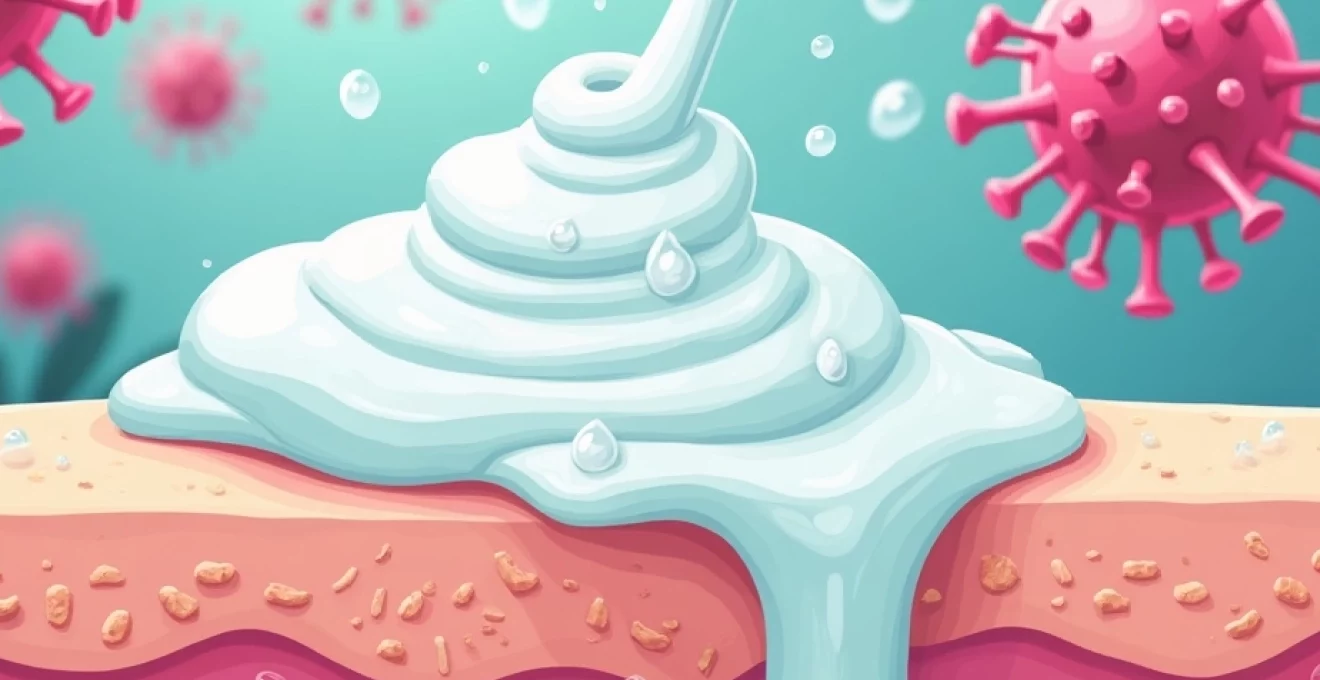
The herpes simplex virus (HSV) affects millions of people worldwide, with HSV-1 primarily causing oral herpes and cold sores, whilst HSV-2 typically results in genital herpes. Understanding how effectively soap and water can neutralise this persistent virus has become increasingly important, particularly as health professionals emphasise proper hygiene practices. The unique structure of herpes viruses makes them particularly vulnerable to certain cleaning agents, yet the virus’s ability to remain dormant within nerve cells presents ongoing challenges for complete eradication.
Recent scientific research has revealed fascinating insights into how common household cleaning products interact with different viral structures. Laboratory studies demonstrate that enveloped viruses like HSV respond differently to soap-based treatments compared to their non-enveloped counterparts. This distinction has profound implications for infection prevention strategies and personal hygiene protocols.
Herpes simplex virus structure and survival mechanisms outside host cells
The herpes simplex virus possesses a complex multilayered structure that significantly influences its vulnerability to external threats. At its core lies a double-stranded DNA genome encased within an icosahedral protein capsid. This capsid is surrounded by a protein layer called the tegument, which contains various enzymes essential for viral replication. Most importantly, the entire structure is enveloped by a lipid bilayer membrane derived from the host cell during viral budding.
HSV-1 and HSV-2 lipid envelope composition and vulnerability points
The viral envelope represents the herpes virus’s greatest strength and most significant weakness simultaneously. This lipid bilayer contains embedded glycoproteins that facilitate cell recognition and membrane fusion during infection. The envelope’s composition mirrors that of cellular membranes, incorporating phospholipids, cholesterol, and various membrane proteins. However, this similarity to cellular membranes also makes the envelope susceptible to disruption by surfactants and detergents.
Laboratory analyses reveal that the envelope’s lipid composition varies slightly between HSV-1 and HSV-2, though both maintain similar vulnerabilities to soap-based treatments. The presence of unsaturated fatty acids within the envelope creates areas of membrane fluidity that become particularly unstable when exposed to amphiphilic molecules found in soap formulations.
Viral capsid protein stability in environmental conditions
Beneath the vulnerable envelope lies the considerably more robust viral capsid, constructed from multiple protein subunits arranged in precise geometric patterns. This protein shell demonstrates remarkable stability under various environmental conditions, maintaining its structural integrity even after envelope destruction. The capsid’s resilience explains why physical removal through mechanical washing action becomes crucial for complete viral elimination.
Research indicates that whilst soap effectively destroys the viral envelope, rendering the virus non-infectious, the remaining capsid proteins can persist on surfaces for extended periods. This persistence has implications for detection methods and cleaning protocols in healthcare settings.
Extracellular survival duration on common surfaces and materials
Studies examining viral survival on various surfaces reveal that herpes simplex virus can remain viable outside the human body for surprisingly brief periods compared to other pathogens. On non-porous surfaces such as glass, plastic, or metal, HSV typically maintains infectivity for only a few hours to several days, depending on environmental conditions.
Recent research demonstrates that on glass surfaces specifically, HSV-1 shows measurable viability for up to three weeks under optimal conditions. However, this survival rate drops dramatically when surfaces are exposed to normal household cleaning procedures. The virus shows particular sensitivity to desiccation, with moisture levels playing a critical role in maintaining viral integrity.
Temperature and humidity effects on viral viability
Environmental factors significantly impact HSV survival outside host cells, with temperature and humidity creating the most pronounced effects. Higher temperatures accelerate viral degradation, whilst moderate humidity levels can either preserve or destroy viral particles depending on other concurrent factors. Laboratory studies show that temperatures above 37°C cause rapid envelope destabilisation, even without soap intervention.
Conversely, lower temperatures and high humidity can extend viral survival significantly. This temperature sensitivity provides additional justification for using warm water during handwashing procedures, as the thermal effect complements the chemical action of soap surfactants.
Soap surfactant chemistry and antiviral mechanisms against enveloped viruses
The effectiveness of soap against herpes viruses stems from fundamental principles of surfactant chemistry and membrane biology. Soap molecules possess both hydrophilic (water-loving) and lipophilic (fat-loving) properties, allowing them to interact with and disrupt lipid-based structures. This amphiphilic nature makes soap particularly effective against enveloped viruses, which depend on their lipid membrane for infectivity and survival.
When soap encounters viral envelopes, the surfactant molecules begin inserting themselves into the lipid bilayer, creating areas of instability and eventual membrane rupture. This process occurs rapidly, typically within seconds of contact, making proper handwashing technique highly effective for viral inactivation.
Sodium lauryl sulphate and amphiphilic molecule disruption properties
Sodium lauryl sulphate (SLS), a common ingredient in many household soaps, demonstrates particularly potent antiviral properties against enveloped viruses. This anionic surfactant possesses a hydrophobic alkyl chain and a hydrophilic sulphate head group, creating an ideal molecular structure for membrane disruption. Laboratory testing shows that SLS can achieve greater than 99.9% viral inactivation within 60 seconds of contact.
The mechanism involves SLS molecules penetrating the viral envelope and disrupting the organised lipid structure through competitive binding with membrane phospholipids. This disruption creates pores and eventually leads to complete envelope dissolution, exposing the viral capsid to the aqueous environment and effectively neutralising infectivity.
Lipid bilayer solubilisation through micelle formation
The process of viral envelope destruction occurs through micelle formation, where soap molecules organise themselves around lipid components extracted from the viral membrane. As surfactant concentration increases beyond the critical micelle concentration, soap molecules begin forming spherical structures that encapsulate membrane lipids and proteins.
This solubilisation process effectively dissolves the viral envelope, much like how soap removes grease from dishes. The resulting micelles remain stable in the aqueous washing solution, preventing viral reassembly and ensuring permanent inactivation. Understanding this mechanism helps explain why adequate soap concentration and contact time prove essential for reliable viral elimination.
Mechanical action requirements for effective viral envelope destruction
Whilst chemical disruption provides the primary mechanism for viral inactivation, mechanical action through vigorous handwashing significantly enhances the process. The physical friction generated during proper handwashing technique helps distribute soap molecules across all surface areas whilst simultaneously removing both intact and disrupted viral particles.
Research indicates that mechanical action alone, without soap, can remove approximately 75% of surface-bound viruses through physical dislodgement. However, combining mechanical action with appropriate surfactants increases removal efficiency to over 99.9%, highlighting the synergistic effect of proper handwashing technique.
Comparative efficacy of anionic versus non-ionic detergent formulations
Different soap formulations demonstrate varying degrees of antiviral efficacy, with anionic detergents generally showing superior performance against enveloped viruses compared to non-ionic alternatives. Anionic surfactants like SLS create stronger electrostatic interactions with membrane components, leading to more rapid and complete envelope disruption.
However, recent studies suggest that non-ionic surfactants, whilst potentially less aggressive, still achieve significant viral inactivation when used with appropriate contact times and concentrations. These gentler formulations may prove beneficial in healthcare settings where frequent handwashing causes skin irritation, providing effective viral control whilst maintaining skin integrity.
Water temperature and contact time variables in HSV inactivation
The relationship between water temperature, contact time, and viral inactivation reveals complex interactions that significantly impact cleaning effectiveness. Temperature affects both the physical properties of soap solutions and the stability of viral structures, whilst contact duration determines the extent of surfactant penetration and membrane disruption. Understanding these variables enables optimisation of handwashing protocols for maximum antiviral efficacy.
Optimal water temperature ranges for maximum viral destruction
Laboratory studies examining temperature effects on HSV inactivation demonstrate that water temperatures between 40-60°C provide optimal conditions for rapid viral destruction. At these temperatures, increased molecular motion enhances surfactant efficiency whilst simultaneously destabilising the viral envelope through thermal stress. However, temperatures exceeding 60°C may cause skin damage during prolonged exposure, creating a practical upper limit for routine handwashing.
Interestingly, research shows that even lukewarm water (25-35°C) achieves significant viral inactivation when combined with appropriate soap concentrations and contact times. This finding proves particularly relevant for situations where hot water availability is limited, demonstrating that proper technique can compensate for suboptimal temperature conditions.
Minimum contact duration requirements for complete viral inactivation
Time represents a critical factor in achieving reliable viral elimination, with most health authorities recommending minimum contact durations of 20 seconds for effective handwashing. Laboratory testing supports this recommendation, showing that 15-20 seconds of soap contact achieves greater than 99% viral inactivation under typical washing conditions.
However, contact time requirements can vary significantly depending on soap concentration, water temperature, and initial viral load. Studies indicate that increasing contact time to 30-40 seconds provides additional safety margins, particularly important in healthcare settings or during outbreak situations where maximum protection is essential.
Handwashing technique impact on mechanical viral removal
The mechanical aspects of handwashing technique play crucial roles in viral removal that extend beyond simple chemical inactivation. Proper technique ensures soap distribution across all hand surfaces, including commonly missed areas such as fingertips, thumbs, and areas between fingers. Research demonstrates that individuals who follow structured handwashing protocols achieve significantly better viral removal compared to those using casual washing approaches.
Video analysis studies of handwashing behaviour reveal that most people spend insufficient time washing their hands and fail to cover all surface areas adequately. These behavioural factors can significantly reduce the effectiveness of even the most potent antiviral formulations, emphasising the importance of proper education and technique training.
The combination of appropriate surfactant chemistry, adequate water temperature, sufficient contact time, and proper mechanical action creates a multi-layered approach that ensures reliable herpes virus inactivation during routine handwashing procedures.
Clinical evidence and laboratory studies on soap effectiveness against herpes
Extensive laboratory research provides compelling evidence for soap’s effectiveness against herpes simplex viruses, with multiple independent studies confirming significant viral inactivation rates. A landmark study examining household dishwashing detergents found that these common cleaning products efficiently inactivate HSV-1, achieving greater than 4 log reduction in viral titre within 60 seconds of exposure at temperatures up to 43°C. This research demonstrates that even basic soap formulations possess potent antiviral properties against enveloped viruses.
Clinical observations support laboratory findings, with epidemiological studies showing reduced transmission rates in populations practicing frequent handwashing with soap and water. Healthcare facilities implementing rigorous hand hygiene protocols report significant decreases in healthcare-associated herpes infections, particularly in vulnerable patient populations such as newborns and immunocompromised individuals.
Recent transmission electron microscopy studies provide visual evidence of soap’s destructive effects on viral architecture. These detailed analyses show complete envelope dissolution and capsid exposure following soap treatment, confirming the mechanism of action proposed by earlier biochemical studies. The morphological changes observed in treated viral samples demonstrate irreversible damage that prevents successful infection of target cells.
Comparative studies examining different cleaning agents reveal that soap and water combinations outperform many commercial hand sanitisers in terms of physical viral removal . Whilst alcohol-based sanitisers effectively inactivate viruses through protein denaturation, they lack the mechanical removal properties that make soap and water particularly effective for eliminating viral particles from skin surfaces.
Limitations of soap and water against intracellular and latent HSV forms
Despite soap’s remarkable effectiveness against extracellular viral particles, significant limitations exist when considering the complete herpes infection cycle. The most important limitation involves the virus’s ability to establish latency within nerve cell bodies, where it remains completely protected from external cleaning agents. Once HSV establishes latent infection, no amount of external hygiene measures can eliminate the dormant viral genome.
During active replication phases, intracellular viral particles also remain protected from soap’s antiviral effects. Newly synthesised viral components within infected cells continue producing infectious particles regardless of external hygiene measures, highlighting the importance of early intervention and comprehensive infection prevention strategies.
The timing of soap application represents another critical limitation, as viral transmission often occurs through direct contact with infectious secretions that may penetrate mucosal surfaces before adequate cleaning can take place. This temporal factor explains why preventive measures such as avoiding contact during active outbreaks remain essential components of transmission prevention strategies.
Understanding these limitations helps establish realistic expectations for soap-based hygiene measures whilst emphasising the continued importance of comprehensive infection prevention approaches that address multiple aspects of viral transmission.
Professional disinfection protocols and WHO recommendations for HSV control
Professional healthcare settings implement sophisticated disinfection protocols that extend beyond basic soap and water treatments to ensure comprehensive herpes virus control. These protocols typically incorporate multiple antimicrobial agents, specified contact times, and standardised application procedures designed to achieve maximum pathogen elimination. The World Health Organisation recommends multi-tiered approaches that combine chemical disinfection with physical removal techniques for optimal infection control outcomes.
Healthcare facility protocols often specify different cleaning requirements based on contamination risk levels, with high-risk areas such as sexual health clinics and neonatal units receiving enhanced disinfection procedures. These enhanced protocols may include quaternary ammonium compounds, chlorine-based disinfectants, or hydrogen peroxide solutions that provide broader spectrum antimicrobial activity compared to soap alone.
Equipment decontamination procedures in clinical settings require specific attention to herpes virus elimination, particularly for instruments that contact mucosal surfaces or potentially infectious secretions. Standard protocols recommend initial cleaning with enzymatic detergents to remove organic matter, followed by high-level disinfection using approved antimicrobial agents with demonstrated efficacy against enveloped viruses.
Recent updates to international disinfection guidelines reflect growing understanding of viral transmission mechanisms and the need for evidence-based cleaning protocols. These guidelines emphasise the importance of proper cleaning technique training for healthcare personnel, regular protocol compliance monitoring, and continuous updates based on emerging scientific evidence. The integration of these comprehensive approaches ensures that professional healthcare settings maintain the highest standards of infection prevention whilst acknowledging the specific challenges posed by herpes virus transmission patterns.