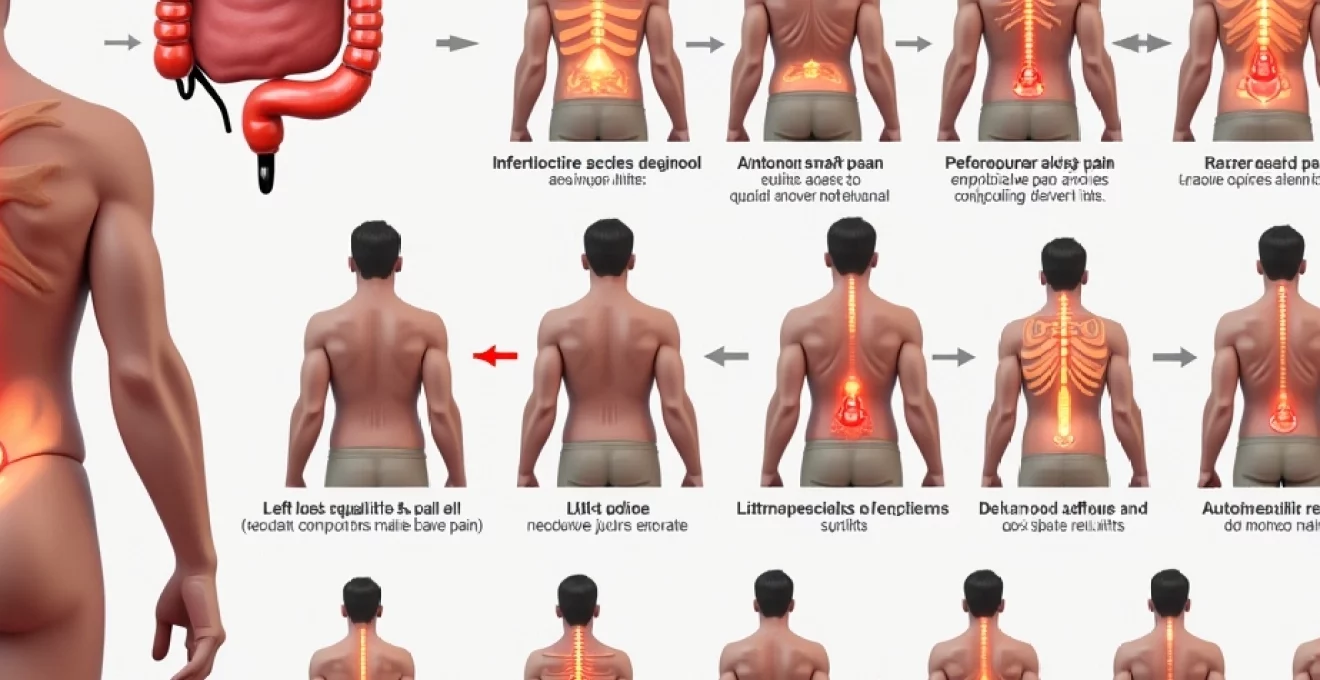
Diverticulitis, a condition characterised by inflammation of small pouches called diverticula in the colon wall, affects millions of people worldwide, particularly those over 40 years of age. While most individuals associate diverticulitis primarily with abdominal discomfort, many patients experience significant back pain as a prominent symptom. This connection between digestive inflammation and spinal discomfort often puzzles both patients and healthcare providers, leading to delayed diagnosis and suboptimal treatment approaches. Understanding the complex anatomical and physiological mechanisms that link diverticular disease to back pain is crucial for proper recognition, diagnosis, and management of this multifaceted condition.
Diverticulitis pathophysiology and anatomical pain referral mechanisms
The relationship between diverticulitis and back pain stems from the intricate network of nerve pathways that connect the gastrointestinal system to the spinal column. When diverticula become inflamed or infected, the resulting inflammatory cascade triggers a complex series of neurological responses that can manifest as pain in regions far from the original site of inflammation.
Sigmoid colon inflammation and visceral pain transmission pathways
The sigmoid colon, where diverticulitis most commonly occurs in Western populations, shares extensive neural connections with the lumbar spine through the autonomic nervous system. Visceral pain pathways from the sigmoid colon travel through the hypogastric plexus and sympathetic chain, ultimately converging with somatic pain fibres at the spinal cord level between L2 and L4 vertebrae. This anatomical convergence explains why patients frequently experience lower left back pain that mirrors the distribution of their abdominal symptoms.
The inflammatory mediators released during acute diverticulitis, including prostaglandins, cytokines, and substance P, sensitise these shared neural pathways. This sensitisation process, known as viscero-somatic convergence , creates a phenomenon where signals originating from the inflamed colon are interpreted by the brain as emanating from the corresponding back region.
Autonomic nervous system response to diverticular infection
During diverticular inflammation, the autonomic nervous system undergoes significant activation, particularly the sympathetic division. This response triggers widespread physiological changes that extend beyond the localised colonic inflammation. The sympathetic nerve fibres innervating the sigmoid colon also supply the paravertebral muscles and fascial planes of the lower back.
When diverticulitis occurs, the resulting sympathetic hyperactivity causes muscle tension and spasm in the paraspinal musculature. This muscular response serves as a protective mechanism, attempting to splint the affected area and prevent further irritation. However, this protective guarding often manifests as persistent, aching back pain that can be as debilitating as the primary abdominal symptoms.
Retroperitoneal space involvement in complicated diverticulitis
In cases of complicated diverticulitis, inflammation can extend beyond the confines of the colon wall into the surrounding retroperitoneal space. This anatomical region houses critical structures including the psoas muscle, lumbar plexus nerves, and various fascial planes that extend to the posterior abdominal wall and lower back.
When inflammatory exudate or infected material spreads into the retroperitoneal space, it directly irritates these structures, causing mechanical compression and chemical irritation of nerve roots. This process results in a more severe, persistent form of back pain that often requires more aggressive treatment than uncomplicated diverticulitis.
The retroperitoneal extension of diverticular inflammation represents a critical point where gastrointestinal disease transitions from purely visceral symptoms to combined viscero-somatic pain patterns.
Psoas muscle irritation from adjacent colonic inflammation
The psoas muscle, which originates from the lumbar vertebrae and extends to the femur, lies in close anatomical proximity to the sigmoid colon. During acute diverticulitis, inflammatory mediators can directly affect the psoas muscle through several mechanisms. Direct extension of infection into the psoas muscle, though rare, can occur in severe cases, creating a condition known as psoas abscess .
More commonly, the inflammatory process causes reactive muscle spasm and irritation without frank infection. This psoas irritation manifests as deep, aching pain that radiates from the lower back into the groin and anterior thigh. Patients often report difficulty with hip flexion and experience increased pain when attempting to lift their leg or sit up from a lying position.
Clinical presentation of Diverticulitis-Associated back pain patterns
The clinical manifestation of back pain in diverticulitis follows predictable anatomical patterns that correspond to the underlying pathophysiology. Understanding these patterns is essential for healthcare providers to recognise the connection between digestive and spinal symptoms, leading to more accurate diagnosis and appropriate treatment strategies.
Left lower quadrant pain radiating to lumbar spine L2-L4 distribution
The most common pattern of diverticulitis-related back pain involves radiation from the left lower abdominal quadrant to the corresponding lumbar spine region. This pain typically follows the dermatomal distribution of the L2, L3, and L4 nerve roots, creating a characteristic band of discomfort that extends from the lateral abdomen around to the posterior lumbar region.
Patients describe this pain as a deep, aching sensation that intensifies with movement, coughing, or straining. Unlike mechanical back pain, which typically worsens with specific movements or positions, diverticulitis-related back pain tends to be more constant and may actually improve slightly with gentle movement or walking. The pain often has a throbbing quality that corresponds to the inflammatory pulsations within the affected colon segment.
Flank pain mimicking nephrolithiasis in sigmoid diverticulitis
In some cases, diverticulitis can present with flank pain that closely mimics renal colic or nephrolithiasis. This presentation occurs when inflammation from sigmoid diverticulitis spreads to involve the lateral paracolic gutters or when retroperitoneal inflammation affects the course of the ureter.
The similarity between diverticulitis flank pain and kidney stone pain can lead to diagnostic confusion, particularly in emergency department settings. However, careful clinical assessment reveals key differences: diverticulitis flank pain is typically less severe than renal colic, has a more gradual onset, and is often accompanied by bowel habit changes or abdominal tenderness that is absent in pure urological conditions.
Sacroiliac joint region discomfort from pelvic inflammatory response
When diverticulitis involves the rectosigmoid junction or when inflammation extends into the pelvis, patients may experience pain in the sacroiliac joint region. This pain pattern results from inflammatory mediators affecting the sacral nerve roots and the complex network of ligaments and muscles surrounding the sacroiliac joint.
Sacroiliac pain from diverticulitis is characterised by a deep, boring sensation in the lower back just above the buttocks. Patients often report difficulty finding comfortable sleeping positions and may experience increased pain when transitioning from sitting to standing. This pain pattern is particularly common in elderly patients with diverticulitis, where age-related changes in pelvic anatomy may predispose to more extensive inflammatory spread.
Thoracolumbar junction pain in splenic flexure diverticular disease
While less common than sigmoid diverticulitis, inflammation affecting the splenic flexure of the colon can cause pain at the thoracolumbar junction. This anatomical region, where the thoracic spine transitions to the lumbar spine, receives nerve supply from both thoracic and lumbar nerve roots, creating a unique pain pattern.
Splenic flexure diverticulitis pain often radiates to the left shoulder and can be mistaken for cardiac or pulmonary conditions. The back pain associated with this condition tends to be higher than typical diverticulitis back pain, affecting the T12-L1 region. Patients may report increased pain with deep breathing or twisting movements, reflecting the involvement of respiratory muscles and thoracolumbar fascia in the inflammatory process.
Diagnostic differentiation between diverticulitis and primary musculoskeletal disorders
Distinguishing between back pain caused by diverticulitis and primary musculoskeletal disorders requires a systematic approach that considers the clinical presentation, temporal relationships, and associated symptoms. This differentiation is crucial for appropriate treatment selection and prevention of complications.
Primary musculoskeletal back pain typically has a clear mechanical component, with symptoms that worsen with specific movements or positions and improve with rest. In contrast, diverticulitis-related back pain tends to be more constant and is accompanied by systemic symptoms such as fever, altered bowel habits, and abdominal tenderness. The onset of diverticulitis back pain is usually more gradual, developing over hours to days, while mechanical back pain often has an acute onset related to a specific activity or injury.
Laboratory findings can provide additional diagnostic clues, as diverticulitis typically causes elevation of inflammatory markers such as C-reactive protein and white blood cell count, which are normal in uncomplicated mechanical back pain. Urinalysis abnormalities may also be present in diverticulitis due to irritation of adjacent urological structures, while these findings are absent in pure musculoskeletal conditions.
The response to treatment also helps differentiate these conditions. Diverticulitis back pain typically improves with antibiotic therapy and bowel rest, while mechanical back pain responds better to physical therapy, anti-inflammatory medications, and activity modification. This therapeutic response can serve as a diagnostic test when the clinical picture remains unclear.
The key to accurate diagnosis lies in recognising that diverticulitis back pain rarely occurs in isolation but is part of a broader symptom complex that includes gastrointestinal and systemic manifestations.
| Feature | Diverticulitis Back Pain | Musculoskeletal Back Pain |
|---|---|---|
| Onset | Gradual, over hours to days | Often acute, activity-related |
| Pain quality | Constant, throbbing | Variable, often sharp or aching |
| Movement effect | Less positional variation | Marked worsening with movement |
| Associated symptoms | Fever, bowel changes, nausea | Usually none |
| Laboratory findings | Elevated inflammatory markers | Normal |
CT colonography and MRI findings correlating bowel inflammation with spinal symptoms
Advanced imaging techniques play a crucial role in establishing the connection between diverticular inflammation and back pain symptoms. Computed tomography (CT) with oral and intravenous contrast remains the gold standard for diagnosing diverticulitis and can simultaneously assess for complications that might explain associated back pain.
CT colonography findings that correlate with back pain include wall thickening of the sigmoid colon , pericolonic fat stranding, and fluid collections that extend into the retroperitoneal space. The degree of fat stranding often correlates with the severity of back pain, as more extensive inflammation is associated with greater involvement of adjacent structures. When CT demonstrates extension of inflammatory changes to the psoas muscle or paravertebral regions, this directly explains the mechanism of referred back pain.
Magnetic resonance imaging (MRI) offers superior soft tissue contrast and can better delineate the relationship between colonic inflammation and spinal structures. MRI is particularly valuable in assessing for complications such as psoas abscess formation or sacroiliitis secondary to pelvic inflammatory spread. The multiplanar capabilities of MRI allow for detailed evaluation of nerve root involvement and can identify subtle inflammatory changes in the sacroiliac joints that might not be apparent on CT.
Recent advances in MR enterography have enhanced the ability to visualise bowel wall inflammation and its relationship to adjacent anatomical structures. These techniques can demonstrate increased signal intensity in the bowel wall, reactive lymph nodes, and inflammatory changes in the mesentery that help explain the pathophysiology of referred pain patterns. The correlation between imaging findings and clinical symptoms helps validate the connection between diverticular disease and back pain complaints.
Complications of diverticulitis causing secondary back pain syndromes
Complicated diverticulitis can lead to several serious conditions that create distinct back pain syndromes, each requiring specific diagnostic and therapeutic approaches. Understanding these complications is essential for recognising when back pain represents a more serious underlying condition that may require urgent intervention.
Diverticular abscess formation represents one of the most significant complications that can cause severe back pain. When abscesses develop in the pelvis or extend into the retroperitoneal space, they create mass effect and inflammatory pressure on adjacent nerves and muscles. Pelvic abscesses commonly cause deep, persistent back pain that radiates into the buttocks and posterior thighs, while retroperitoneal abscesses may cause flank pain that extends around to the back.
Perforation of inflamed diverticula can lead to peritonitis, which creates widespread abdominal and back pain due to irritation of the parietal peritoneum. The back pain associated with peritonitis is typically severe and constant, with patients often describing a sensation of deep, burning discomfort that is exacerbated by any movement. This complication requires immediate surgical intervention and represents a medical emergency.
Fistula formation, particularly colovesical or colovaginal fistulas, can cause chronic back pain due to ongoing inflammatory processes and recurrent infections. The chronic nature of fistulous disease leads to persistent low-grade inflammation that maintains sensitisation of neural pathways, resulting in chronic pain syndromes that can be challenging to treat effectively.
Recognition of complicated diverticulitis requires a high index of suspicion when back pain is severe, persistent, or associated with systemic signs of infection or sepsis.
Bowel obstruction from diverticular strictures can cause cramping abdominal pain that radiates to the back, particularly when the obstruction leads to bowel distension and increased intraluminal pressure. This type of back pain is often cramping in nature and may be associated with nausea, vomiting, and inability to pass gas or stool. The diagnosis requires urgent imaging and may necessitate surgical intervention to relieve the obstruction.
Evidence-based treatment protocols for Diverticulitis-Related dorsalgia management
The management of back pain associated with diverticulitis requires a comprehensive approach that addresses both the underlying inflammatory process and the secondary musculoskeletal symptoms. Evidence-based treatment protocols emphasise the importance of treating the primary diverticular inflammation while providing targeted symptom relief for back pain complaints.
Antibiotic therapy forms the cornerstone of diverticulitis treatment and typically results in gradual improvement of associated back pain as the inflammatory process resolves. The choice of antibiotics depends on the severity of disease and patient factors, with outpatient oral regimens appropriate for uncomplicated cases and intravenous therapy reserved for complicated or severe presentations. Pain relief typically begins within 48-72 hours of initiating appropriate antibiotic therapy as inflammatory mediators decrease.
Pain management strategies must balance effective symptom control with safety considerations specific to diverticulitis patients. Acetaminophen represents the first-line analgesic choice, as it provides effective pain relief without the increased bleeding risk associated with nonsteroidal anti-inflammatory drugs (NSAIDs). For severe pain, short-term opioid analgesics may be necessary, though careful monitoring is required due to their potential to worsen constipation and mask signs of complications.
Physical therapy interventions can be valuable for managing diverticulitis-related back pain, particularly during the recovery phase. Gentle stretching exercises, heat therapy, and postural training help address the muscular tension and spasm that contribute to ongoing discomfort. However, aggressive manipulation or intensive exercise should be avoided during the acute inflammatory phase to prevent exacerbation of symptoms or complications.
Dietary modifications play a crucial role in both acute management and long-term prevention of recurrent episodes. During acute diverticulitis, a clear liquid diet allows bowel rest and reduces mechanical irritation of infl
amed tissue. Gradually transitioning to a low-fiber diet and eventually returning to a high-fiber intake helps prevent future episodes and reduces the risk of recurrent back pain.
Muscle relaxants may be prescribed for patients experiencing significant paraspinal muscle spasm associated with diverticulitis. Cyclobenzaprine or methocarbamol can be particularly effective in breaking the cycle of muscle tension that perpetuates back pain. These medications should be used judiciously and for short durations to avoid dependence and side effects such as sedation or confusion, particularly in elderly patients.
Heat therapy applied to the affected back region can provide significant symptomatic relief by improving blood flow and reducing muscle tension. Warm compresses or heating pads applied for 15-20 minute intervals can help alleviate the deep, aching discomfort associated with diverticulitis-related dorsalgia. Cold therapy may be beneficial during the acute inflammatory phase, though many patients find heat more comforting for the chronic, cramping nature of diverticulitis back pain.
For patients with recurrent diverticulitis and persistent back pain, elective sigmoid resection may be considered. This surgical approach removes the affected segment of colon and can provide definitive relief from both abdominal and back pain symptoms. Studies demonstrate that laparoscopic sigmoid resection results in resolution of back pain in approximately 85-90% of patients with recurrent diverticulitis, making it an effective long-term solution for appropriately selected candidates.
The key to successful management lies in recognizing that diverticulitis-related back pain is a secondary manifestation of the primary inflammatory process, and treatment must address both the underlying condition and the resulting musculoskeletal symptoms.
Probiotic supplementation has emerged as a valuable adjunctive therapy for preventing recurrent diverticulitis and its associated complications. Research indicates that specific probiotic strains can help maintain healthy gut microbiota balance, reduce intestinal inflammation, and potentially decrease the frequency of diverticular flare-ups. While the direct impact on back pain is indirect, reducing the frequency of diverticulitis episodes naturally decreases the incidence of associated dorsalgia.
Follow-up care protocols should include regular assessment of both gastrointestinal symptoms and back pain complaints. Patients should be educated about warning signs that might indicate complications requiring immediate medical attention. The development of new or worsening back pain in patients with known diverticular disease should prompt evaluation for potential complications such as abscess formation or perforation.
Multidisciplinary care involving gastroenterologists, primary care physicians, and pain management specialists often provides the most comprehensive approach to managing diverticulitis-related back pain. This collaborative model ensures that all aspects of the condition are addressed while avoiding conflicting treatments that might compromise patient safety or therapeutic efficacy.