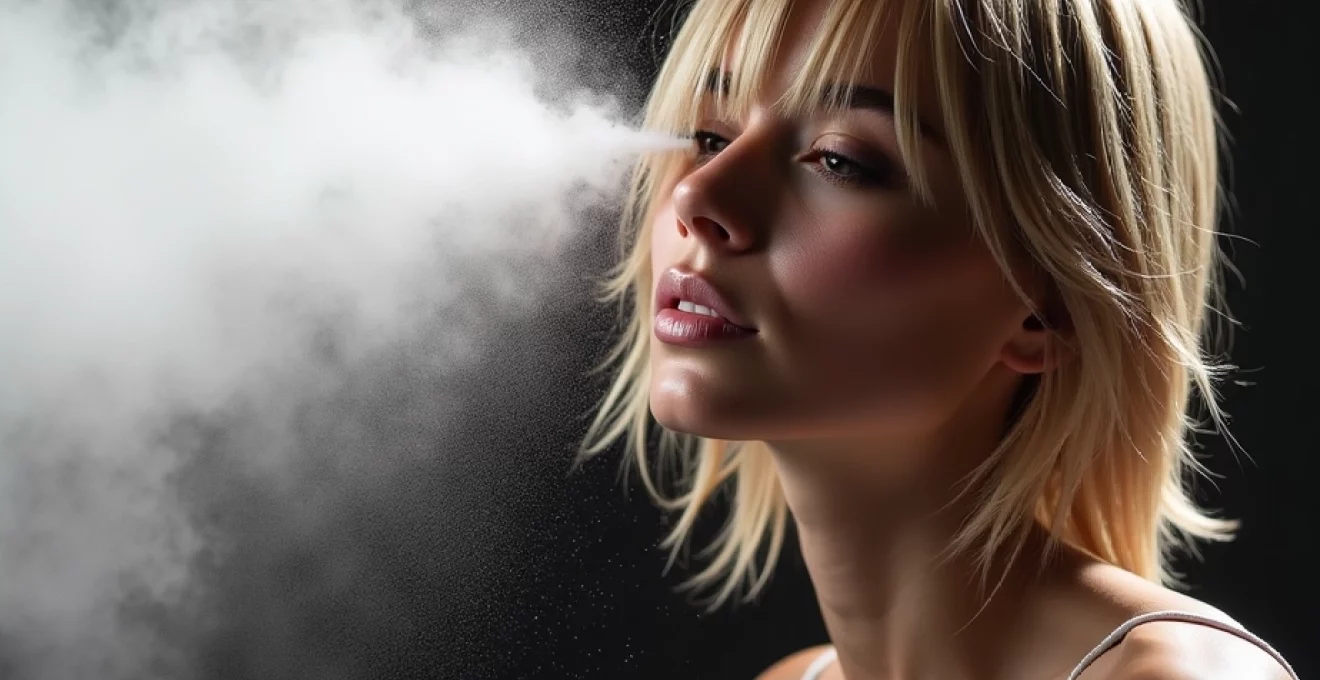
The quest for a hairspray that provides exceptional hold without leaving unsightly white residue has plagued hairstylists and consumers alike for decades. Whether you’re preparing for a professional photoshoot, attending a special event, or simply maintaining your everyday style, the last thing you want is a product that compromises the visual appeal of your carefully crafted hairstyle. White residue not only detracts from the natural beauty of your hair but can also create an unprofessional appearance, particularly problematic when flash photography is involved.
Modern hairspray formulations have evolved significantly, with manufacturers investing considerable resources into developing invisible-hold technologies that maintain styling integrity without visible buildup. The challenge lies in understanding which products truly deliver on their promises and how to select the most appropriate formula for your specific hair type and styling requirements.
Understanding white residue formation in hairspray formulations
The formation of white residue in hairsprays stems from complex chemical interactions that occur during the application and drying process. When hairspray is dispensed, the active ingredients must transform from a liquid state to a solid film that provides hold, and it’s during this transition that visible residue can develop.
Polymeric Film-Forming agents and crystallisation mechanisms
The primary culprits behind white residue formation are polymeric film-forming agents, specifically polyvinylpyrrolidone (PVP) and various acrylic copolymers. These synthetic polymers create the holding power in hairsprays by forming a flexible film around hair strands. However, when these polymers crystallise too rapidly or in uneven distributions, they become visible as white flakes or powdery deposits.
The molecular weight of these polymers significantly influences their propensity to create residue. Higher molecular weight polymers tend to form thicker films that are more likely to become visible, particularly on darker hair colours. Conversely, lower molecular weight alternatives may provide less holding power but offer superior invisible application characteristics.
Alcohol-based propellants and evaporation rate impact
Alcohol-based propellants play a crucial role in residue formation through their evaporation characteristics. Denatured alcohol , commonly used in hairspray formulations, evaporates at different rates depending on environmental conditions such as humidity and temperature. When alcohol evaporates too quickly, it can cause polymers to precipitate out of solution before they have properly adhered to hair strands.
The concentration of alcohol in the formulation also affects residue formation. Formulations with excessive alcohol content may initially appear to dry quickly and invisibly, but the rapid evaporation can lead to polymer aggregation, resulting in visible buildup after multiple applications or in high-humidity environments.
Particle size distribution in aerosol delivery systems
The aerosol delivery system significantly impacts whether a hairspray will leave white residue. Particle size distribution determines how evenly the product disperses and how well it integrates with hair surfaces. Optimal particle sizes typically range between 10-50 micrometers, allowing for even coverage without excessive concentration in any single area.
Modern micro-fine mist technologies have revolutionised hairspray application by creating smaller, more uniform particles that distribute more evenly across hair surfaces. These advanced delivery systems reduce the likelihood of polymer aggregation and subsequent visible residue formation.
Environmental humidity effects on spray deposition
Environmental humidity profoundly affects how hairspray formulations behave during application and drying. High humidity environments can slow alcohol evaporation rates, potentially causing polymers to remain in solution longer than intended. This extended liquid phase can lead to polymer migration and uneven distribution, ultimately resulting in visible residue formation.
Conversely, extremely low humidity environments may cause rapid evaporation that prevents proper film formation, leading to polymer precipitation and white residue. Understanding these environmental factors helps explain why the same product may perform differently under varying conditions.
Premium Non-Residue hairspray formulations by leading brands
The professional hair care industry has developed several innovative formulations specifically designed to eliminate white residue while maintaining superior holding power. These products represent the pinnacle of hairspray technology, incorporating advanced polymer chemistry and refined delivery systems.
L’oréal elnett satin supreme hold technology
L’Oréal’s Elnett Satin has long been considered the gold standard for invisible hold hairsprays. The formulation utilises a proprietary blend of modified acrylic polymers that create an ultra-fine film virtually invisible to the naked eye. The key innovation lies in the polymer molecular engineering, which allows for exceptional flexibility while maintaining strong holding power.
The product’s success stems from its unique alcohol-to-polymer ratio, which has been optimised through extensive research and development. This precise balance ensures rapid drying without premature polymer crystallisation, resulting in a hold that feels natural while remaining completely invisible, even under flash photography conditions.
Schwarzkopf osis+ freeze strong hold Micro-Fine mist
Schwarzkopf’s professional line offers the Osis+ Freeze formulation, which incorporates advanced micro-encapsulation technology to deliver polymers in microscopic capsules. This innovative approach prevents polymer aggregation during storage and application, significantly reducing the potential for visible residue formation.
The product features a sophisticated delivery system that creates an exceptionally fine mist with consistent particle size distribution. Professional hairstylists particularly appreciate the formulation’s ability to provide maximum hold without the stiffness typically associated with strong-hold products, making it ideal for both editorial work and commercial applications.
Tigi bed head hard head mohawk gel alternative
Tigi’s approach to residue-free hold involves incorporating flexible film-forming agents that maintain elasticity even after drying. The Hard Head formulation utilises a unique polymer matrix that distributes stress evenly across treated hair strands, preventing the micro-fractures that can lead to visible flaking.
This product excels in high-humidity environments where traditional hairsprays often fail. The formulation’s moisture-resistant properties ensure consistent performance regardless of environmental conditions, making it particularly valuable for outdoor events or humid climates where residue formation is typically more problematic.
Redken triple pure 32 neutral ph formula
Redken’s Triple Pure 32 represents a breakthrough in pH-balanced hairspray technology. The formulation maintains a neutral pH that closely matches natural hair chemistry, reducing the likelihood of chemical interactions that can lead to residue formation. This approach is particularly beneficial for colour-treated or chemically processed hair, where pH imbalances can exacerbate residue problems.
The product incorporates ionic polymer technology that creates electrostatic attraction between the hairspray film and hair strands. This enhanced adhesion reduces the amount of product needed for effective hold, thereby minimising the potential for buildup and visible residue formation.
Advanced application techniques for invisible hold results
Even the highest-quality hairspray formulations can produce unwanted residue if applied incorrectly. Professional application techniques can dramatically improve results and ensure invisible hold regardless of the product used.
Optimal spray distance and sectioning methods
The distance between the spray nozzle and hair surface critically affects residue formation. Professional hairstylists typically maintain a distance of 25-30 centimetres, allowing the spray to disperse into fine particles before contact with hair. Closer application can result in excessive product concentration and subsequent residue formation.
Proper sectioning techniques ensure even distribution across all hair areas. Working in small sections allows for controlled application and prevents over-concentration in specific areas. This methodical approach is particularly important for individuals with thick or dense hair, where uneven application is more likely to result in visible buildup.
The key to professional-quality results lies not just in product selection, but in mastering the application technique that transforms even basic formulations into invisible-hold solutions.
Layering protocols for maximum hold without Build-Up
Building hold through multiple light layers proves more effective than single heavy applications for preventing residue formation. Each layer should be allowed to dry completely before applying subsequent coats, typically requiring 30-60 seconds between applications depending on environmental conditions.
The cross-sectioning technique involves applying alternate layers from different angles, ensuring comprehensive coverage without excessive concentration in any single area. This approach creates a three-dimensional holding matrix that provides superior longevity while maintaining invisible application characteristics.
Pre-styling heat protection integration
Integrating heat protection products with hairspray application can actually reduce residue formation by creating a smoother hair surface that promotes even product distribution. Silicone-based heat protectants create a uniform coating that prevents hairspray polymers from adhering unevenly to damaged or porous hair sections.
The sequence of product application significantly impacts final results. Applying heat protection first, followed by styling, and finishing with hairspray creates optimal conditions for invisible hold. This layering sequence also enhances the longevity of the style while protecting hair integrity.
Finishing mist techniques for natural movement
The final application technique involves creating a light finishing mist that seals the entire style without adding additional hold. This technique requires holding the spray at maximum distance while moving in a continuous motion across the entire hairstyle. The result is a protective barrier that maintains style integrity while preserving natural hair movement.
Professional stylists often employ the umbrella technique , spraying above the hairstyle and allowing the fine mist to settle evenly across all surfaces. This method ensures comprehensive coverage while minimising the risk of over-concentration that can lead to visible residue formation.
Professional Salon-Grade alternatives to consumer products
Professional salon-grade hairsprays often utilise significantly different formulation approaches compared to consumer products, focusing on performance and application quality rather than cost considerations. These professional formulations typically incorporate higher-quality raw materials and more sophisticated delivery systems that virtually eliminate residue formation.
Salon-grade products frequently feature professional-strength polymers that provide superior hold with smaller application quantities. The concentration of active ingredients is typically 20-30% higher than consumer formulations, allowing stylists to achieve desired results with minimal product usage. This reduced application requirement inherently decreases the likelihood of visible residue formation.
The packaging and delivery systems used in professional products are engineered for precision application. Professional aerosol systems often incorporate adjustable nozzles and pressure regulation that allows for customised spray patterns. These advanced features enable precise application control that is simply not available in consumer-grade products.
Many professional formulations also incorporate anti-static agents that reduce hair’s tendency to attract environmental particles and pollutants. This additional functionality helps maintain the clean appearance of styled hair throughout the day, preventing the accumulation of external materials that can create the appearance of product residue.
Hair type compatibility and customised product selection
Different hair types respond uniquely to various hairspray formulations, and understanding these interactions is crucial for selecting products that won’t leave visible residue. Fine hair, for example, requires formulations with lower polymer concentrations to prevent weighing down and residue accumulation, while coarse hair can typically handle stronger formulations without visible buildup.
Colour-treated hair presents unique challenges for residue-free application due to altered hair porosity and surface characteristics. The chemical processing involved in colouring creates microscopic changes in hair structure that can cause uneven product absorption. Formulations specifically designed for colour-treated hair often incorporate pH-adjusting agents and specialised polymers that compensate for these structural changes.
Natural hair textures, particularly curly and coily hair types, benefit from formulations with enhanced flexibility and moisture-retention properties. These hair types are more prone to visible residue formation due to their irregular surface structure and natural tendency toward dryness. Products designed for textured hair often incorporate conditioning agents that improve product distribution while maintaining hold.
Understanding your specific hair type and its unique characteristics is fundamental to selecting hairspray formulations that will provide invisible hold without compromising style integrity or visual appeal.
The porosity level of hair significantly affects how hairspray formulations behave after application. High-porosity hair absorbs products more readily, potentially leading to uneven distribution and residue formation. Low-porosity hair may resist product penetration, causing surface buildup. Modern formulations often address these variations through adaptive polymer technology that adjusts to individual hair characteristics.
Cost-performance analysis and Long-Term value assessment
Evaluating hairspray products purely on initial purchase price often leads to poor value decisions when residue formation is considered. Products that leave white residue typically require more frequent washing to maintain hair appearance, increasing long-term costs through additional shampoo usage and potential hair damage from over-washing.
Premium residue-free formulations, while commanding higher initial prices, often provide superior cost-per-use value due to their efficient application characteristics and extended style longevity. Professional-grade products typically require 30-40% less product per application while providing equivalent or superior hold duration, making them more economical over extended periods.
The hidden costs associated with residue-forming products extend beyond direct financial impact. Hair damage from frequent washing, styling product waste due to unsatisfactory results, and time investment in correcting styling mistakes all contribute to the total cost of ownership. These factors often make premium residue-free products the more economical choice for regular users.
Long-term hair health considerations also factor into cost-performance analysis. Products that leave residue often require stronger shampoos for removal, potentially stripping natural oils and causing damage that necessitates additional conditioning treatments. Residue-free formulations typically rinse clean with standard shampooing, maintaining hair health and reducing the need for corrective treatments.